 7430923244


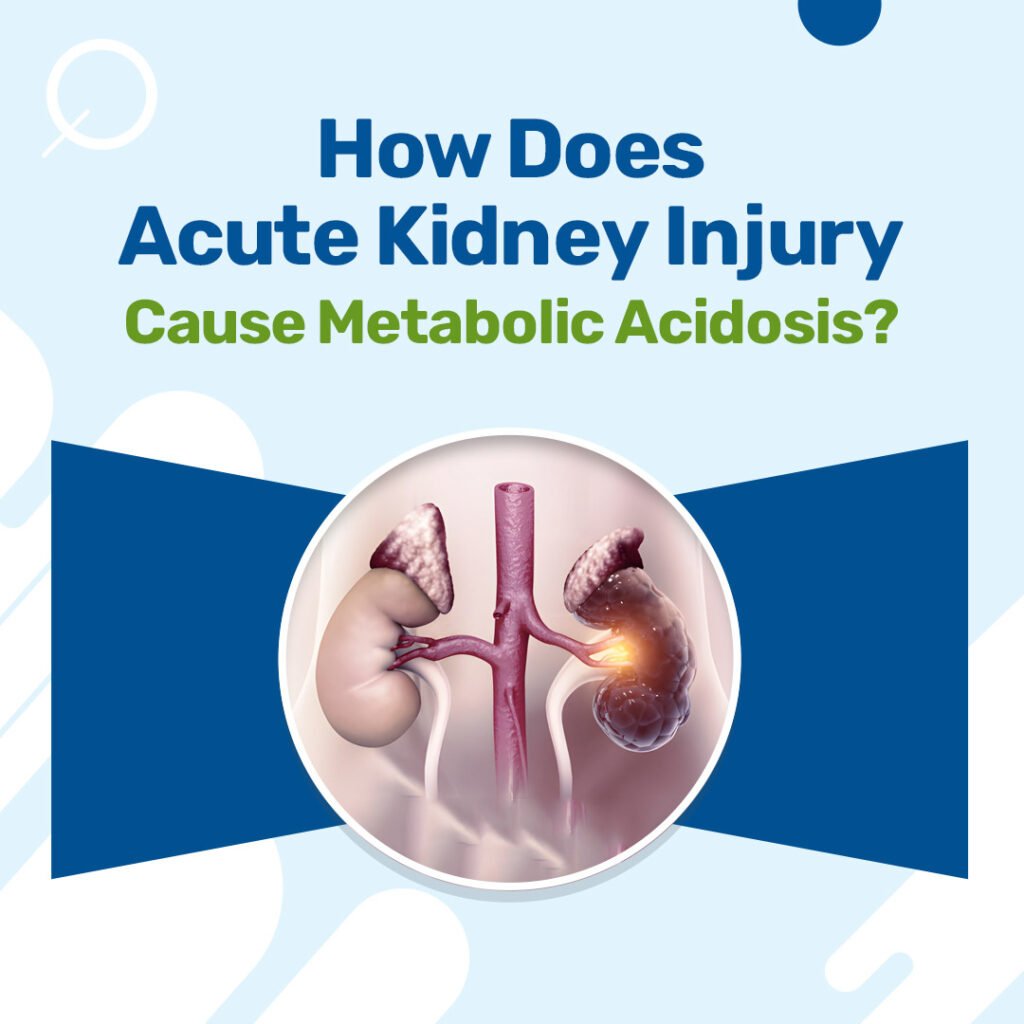
Acute kidney injury (AKI) causes metabolic acidosis because the kidneys lose their ability to remove excess acid from the body and regenerate bicarbonate, which normally keeps the blood’s pH balanced. When the kidneys are damaged suddenly, the body accumulates acids from daily metabolism and diet while losing its buffer system, leading to an acidic state in the blood.
What Happens to Acid Removal in AKI?
The kidneys remove acid through two main processes: reabsorbing bicarbonate in the proximal tubule and creating new bicarbonate by generating ammonia and secreting hydrogen ions in the distal nephron. When AKI occurs, both mechanisms fail because the damaged kidney tissue stops working properly. The declining capacity to excrete fixed acids results in tubular metabolic acidosis, forcing the body to compensate through faster breathing to remove carbon dioxide.
How Does Reduced Ammonia Production Contribute?
Ammonia acts as the primary urinary buffer that helps remove acid from the body. In healthy kidneys, the proximal tubule cells produce ammonia to bind with hydrogen ions, allowing acid excretion in urine. During AKI, the damaged tubular cells produce less ammonia because of mitochondrial dysfunction and reduced metabolic capacity. Without adequate ammonia production, hydrogen ions accumulate in the blood, lowering the pH and creating metabolic acidosis.
What Role Does Bicarbonate Loss Play?
Bicarbonate serves as the body’s natural buffer against acids, and healthy kidneys reabsorb nearly all the filtered bicarbonate while generating new bicarbonate to replace what is consumed neutralizing daily acid production. AKI damages the proximal tubules where bicarbonate reabsorption occurs, leading to bicarbonate loss in the urine. Additionally, the injured kidneys fail to produce adequate new bicarbonate, resulting in depleted reserves that would normally neutralize metabolic acids. This combination of decreased reabsorption and inadequate regeneration causes bicarbonate levels to drop, allowing acids to accumulate unchecked.
How Do Metabolic Changes Worsen Acidosis?
AKI disrupts cellular metabolism in the kidney tubules, creating a cascade of problems that intensify metabolic acidosis. Low oxygen availability and mitochondrial dysfunction impede the electron transport chain, causing the accumulation of intermediate metabolites in the TCA cycle, including succinate, citrate, and fumarate. Research by Bugarski et al. demonstrated that metabolic acidosis increases proximal tubule glutamine uptake and ammonia production, requiring the oxidized form of nicotinamide adenine dinucleotide (NAD), and NAD depletion has been identified as a key step in the pathogenesis of AKI. Using intravital live cell imaging in a mouse model, researchers found acute changes in mitochondrial NAD redox state, respiratory chain function, and lipid metabolism, which led to proximal tubule cell damage.
Why Does the Body Produce More Acid During AKI?
Beyond the kidney’s inability to remove acid, AKI triggers increased acid production through tissue hypoxia and cellular injury. When kidney cells receive insufficient oxygen, they switch to anaerobic metabolism, producing lactic acid as a byproduct. The damaged kidney tissue also releases inflammatory mediators that further increase metabolic acid production throughout the body. Metabolic acidosis reduces renal blood flow in healthy individuals, and this reduction becomes more pronounced in AKI, creating a vicious cycle where poor blood flow worsens kidney injury and acid accumulation.
What Makes AKI-Related Acidosis Different?
The metabolic acidosis from AKI develops suddenly, unlike the gradual acidosis seen in chronic kidney disease. This rapid onset occurs because the acute loss of kidney function gives the body no time to activate compensatory mechanisms. The severity depends on the extent of kidney damage and the underlying cause of AKI, whether from reduced blood flow, direct toxins, or urinary obstruction. Studies show that metabolic acidosis in patients with underlying kidney disease increases the risk of subsequent AKI episodes by 57% to 65%, creating a dangerous pattern where acidosis and kidney injury reinforce each other.
What Are the Consequences of Untreated Acidosis?
Metabolic acidosis from AKI affects multiple body systems beyond just pH imbalance. The acidic environment accelerates muscle breakdown (sarcopenia), causes bone demineralization, and increases weakness as the body breaks down tissues to neutralize excess acid. Research published in the Journal of the American Society of Nephrology found that metabolic acidosis increases inflammatory markers like NF-κB, a key mediator of acute and chronic inflammation, suggesting additional pathways by which metabolic acidosis exacerbates kidney injury. The condition also promotes kidney fibrosis and slows recovery from AKI, increasing the risk of progressing to chronic kidney disease even if kidney function appears to recover initially.
Seeking Expert Care for Kidney Health
Understanding the connection between acute kidney injury and metabolic acidosis helps recognize the importance of early intervention and expert management. If you experience symptoms like unexplained fatigue, confusion, rapid breathing, or reduced urine output, these signs require immediate medical evaluation by a kidney specialist.

Dr. Vishal Golay, a Senior Consultant Nephrologist with over 15 years of experience, provides comprehensive diagnosis and treatment for acute kidney injury and its complications including metabolic acidosis. As one of the best nephrologists in Siliguri, Dr. Golay specializes in advanced kidney disease management, dialysis care, and hypertension-related kidney disorders. His expertise ensures timely intervention to prevent complications and preserve kidney function.
For consultation with Dr. Vishal Golay (MD, DNB, DM), contact 74309 23244 or email vishalgolay1980@gmail.com. Visit Remedy Clinics at Singalila Park, Fortune Plaza Apartments, Dagapur, Siliguri, West Bengal 734003, or Balaji Healthcare at P.C. Mittal Bus Terminus, 2nd Mile, Sevoke Road, Siliguri, West Bengal 734001.

